The Space Between Making Art and Showing Art: The Fear Nobody Talks About
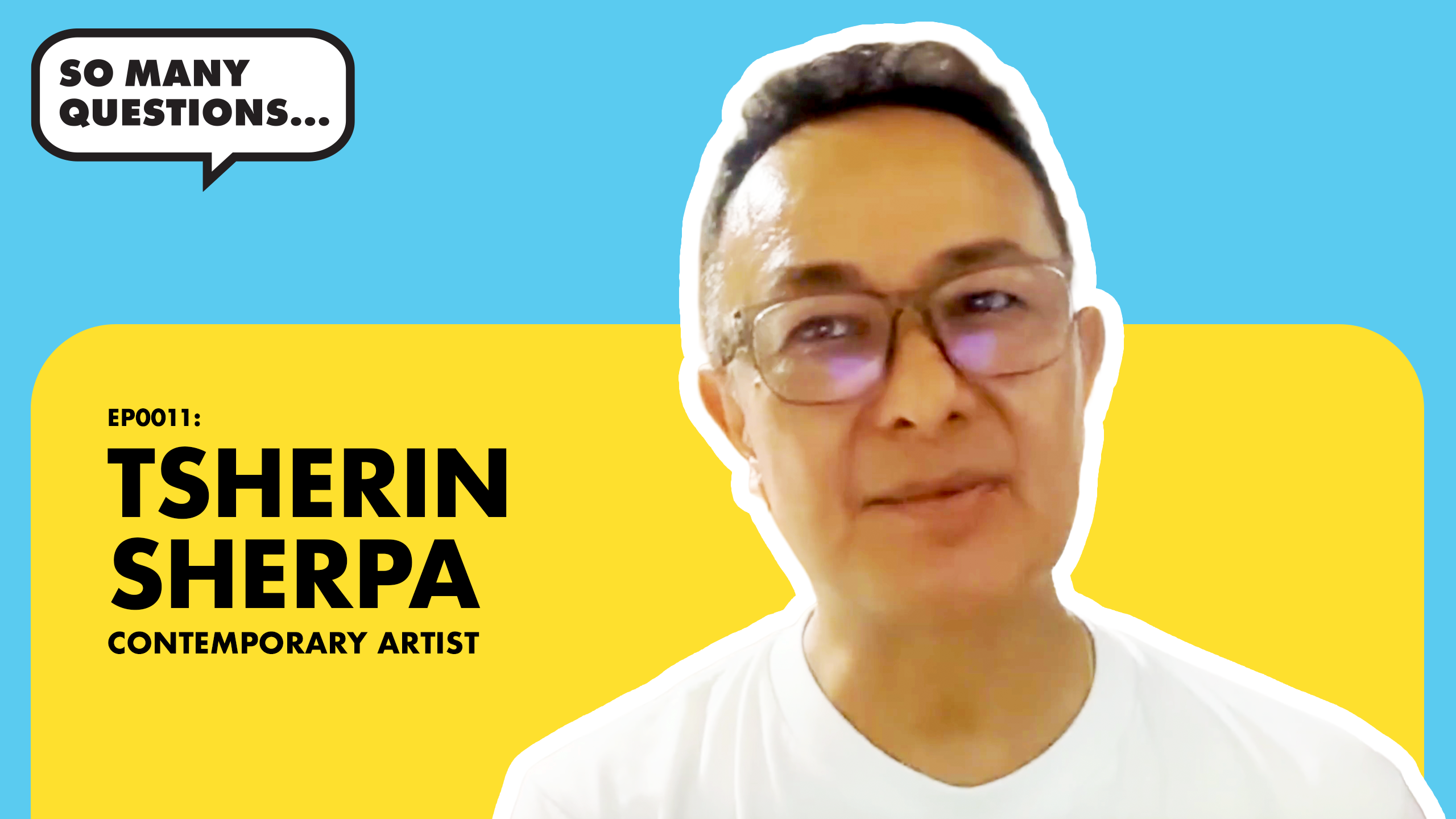
Episode 0011: Tsherin Sherpa on bringing Thangka & the art of Nepal to the contemporary art world
Nepalese artist Tsherin Sherpa on training as a Thangka painter at 13, representing Nepal at the Venice Biennale, and his show at the Honolulu Museum of Art.
You finished the thing. Or you got close enough to finished that you stopped being able to tell the difference. And now it’s sitting there.
A document. A recording. A painting. A draft of something you’re not sure anyone needs. And you’re not sending it. You’re opening it again and changing one sentence. You’re telling yourself it just needs one more pass. You’re wondering whether the whole premise was wrong from the start.
This is the fear nobody names directly: not the fear of criticism, but the fear that exists in the space before you share anything at all. The particular dread of the threshold. It has its own texture, its own logic, and its own way of keeping you frozen indefinitely.
Why the pre-sharing moment is its own thing
Most conversations about creative vulnerability focus on what happens after you put work out into the world. Someone didn’t like it. The response was silence. The numbers were disappointing. That’s real. But it skips over something that happens earlier and is, in some ways, harder to name.
The fear of sharing creative work isn’t fear of a bad outcome. It’s something closer to fear of the moment itself. The irreversibility of having shown someone what you think and feel and made. Once it’s out, it’s out. You can’t un-send it. You can’t take back what it reveals about you.
This is why the urge to keep editing can feel so rational. Every revision is technically improving the work. Every pass is making it stronger. But at some point, the editing stops being about quality and starts being about delay. You’re not refining the work. You’re protecting yourself from the moment of exposure.
This fear doesn’t mean you’re fragile or undisciplined. It means you care about what you made.
The specific fears hiding inside it
The fear of sharing creative work is rarely one clean thing. It tends to be a cluster of smaller, more specific fears that have collapsed into one big reluctance. It helps to pull them apart.
The “what if this is bad” fear. This is the loudest one. The work is not finished. It has a fatal flaw you can almost see but not quite. Someone else will see it instantly and you’ll feel foolish for having tried. This fear is particularly sneaky because it arrives dressed as quality control. It sounds like rigor when it’s actually avoidance.
The “what if this is too revealing” fear. Creative work shows people how you think. What you notice. What moves you. For a lot of people, that kind of visibility is more frightening than any specific criticism. It’s the fear of being known in a way you can’t control.
The “what if nobody cares” fear. This one is quieter and cuts deeper. Rejection through silence. The work goes out and generates no response at all, which somehow feels worse than a negative one. At least criticism means someone engaged.
The “what if I was wrong to try” fear. This one tends to arrive late, once the work is actually done. You finish something and suddenly the whole project feels presumptuous. Who said you had something worth making? Why would anyone want this? This fear tends to be about identity more than craft.
Naming which fear is running the show in a given moment doesn’t make it disappear. But it does make it smaller. A named fear is something you can look at. An unnamed fear is just a wall.
The urge to keep editing
One of the clearest signs that pre-sharing fear is operating is the endless revision loop. The work is functionally done, but you keep returning to it. You change a word. You move a paragraph. You read it from the top again and decide the opening isn’t quite right.
This pattern has a particular quality to it: the changes never feel like they’re closing the gap. Each edit creates new uncertainty. Because the editing was never really about the work.
Rob Bell, in a conversation on So Many Questions…, talked about arriving at a version of this through years of creative work:
The joy is in the making and then you’ve surrendered the outcome.
That sounds simple. It took him, by his own account, a long time to actually understand what it meant in practice.
The trap of endless editing is that it mimics dedication. You’re still working. You’re still invested. But you’ve quietly changed what you’re working toward. You’re no longer trying to make the thing better. You’re trying to feel ready. And that feeling doesn’t come from editing. It comes from somewhere else.
What actually happens when you share
There’s a useful thing to notice about the pattern of fear before sharing creative work: it almost always imagines the worst version of the response.
What actually happens, most of the time, is something quieter than either catastrophe or triumph. Some people engage. Some people don’t. Someone says something useful. Someone says something that stings. Most people say nothing. The world continues more or less unchanged. And the creator is still standing.
This isn’t a promise that sharing always goes well. Sometimes it genuinely doesn’t. But the fear before sharing tends to run hotter than the reality. The imagined response is usually more intense, more unanimous, and more defining than anything that actually arrives.
Bell described something relevant from early in his public creative life: “I was shredded and I remember going back to my apartment and seeing in this chair that my grandma had. Just devastated with how wobbly it actually is. That was early on, the fall of 92. Yeah, I was 22. And I was like, wow, this is like, there is a vulnerability to this that I have to make peace with.”
He was 22. The experience was genuinely painful. And his response to it was to identify it clearly: this is what comes with this. Not to make the pain smaller, but to stop being surprised by it. The fear doesn’t go away. You just stop letting it negotiate.
Signs the fear is running the show
A few patterns worth recognizing:
- You’ve been “almost done” with a piece for longer than it took you to make it
- You share work only in settings where you’re confident of the response
- You find yourself describing your work apologetically before anyone has reacted
- You add disclaimers (“this is rough” / “I wasn’t sure about this”) that soften the work before the other person has even seen it
- You imagine a specific person’s negative reaction and use it as a reason not to send
- You’ve abandoned work not because it wasn’t good but because finishing it meant having to share it
- The revision you keep making is the same one, over and over
None of these are character flaws. They’re rational responses to the genuine vulnerability of showing people what you made. They’re also, over time, expensive. The work you never share doesn’t get a chance to reach the person it was for.
What to do instead: five practical moves
1. Name the specific fear before you open the file again
Before the next revision session, write one sentence: what are you actually afraid of? Not “it’s not ready” but the thing underneath that. Is it judgment? Silence? Being seen? Saying it out loud tends to reduce its power.
2. Set a “done enough” threshold before you start
Before you begin any revision pass, decide what “done” means for this piece. Write it down. If you’ve met those criteria, the next pass is not finishing the work. It’s avoiding the moment of sharing.
3. Find the smallest possible version of sharing
If sending it to everyone feels impossible, send it to one person. If one person feels impossible, read it out loud to yourself and record it. Movement toward sharing, even incremental, tends to loosen the grip of the fear.
Craig Calcaterra did this for years. Before he ever wrote publicly under his own name, he blogged about baseball under a pseudonym because he was afraid of losing his job as a litigation attorney if anyone found out. A fake name was his smallest possible version of sharing. It was enough to build the habit, the voice, and the body of work that eventually became his career.
4. Separate “I’m not sure” from “it needs more work”
These feel the same but they’re not. “I’m not sure” is about your own uncertainty. “It needs more work” is a specific claim about the work itself. Ask: what specific thing is missing? If you can name it, that’s a real edit. If you can’t, you’re probably stalling.
5. Remember that the fear is about you, not the work
The person reading your work is not going to feel all the things you felt while making it. They’re going to encounter a thing you made, with their own context and history, and it will land however it lands. Their response won’t match your fear. It also won’t match your hope. It will just be their response. That is survivable.
From the archives
In his conversation on So Many Questions…, Rob Bell talked about the relationship between making and sharing in a way that stuck with me. About the early experience of putting work out and getting a response:
I experienced making something and sharing it with people. And it literally shaped the course of my life.
That wasn’t a story about fearlessness. Bell also talked directly about vulnerability: “Vulnerability is the engine of the whole thing. Love itself. It’s risk all the way down.”
What he’s describing isn’t a framework for making the fear disappear. It’s an orientation toward the fear. The risk doesn’t go away when you share creative work. You get better at moving through it.
The people who share their work consistently aren’t braver than the people who don’t. They’ve just decided, at some point, that the fear doesn’t get a veto.
Jonny Hoffner heard it put plainly by a former client while building his golf apparel brand Good Lion Golf:
You’re on the shores of the Atlantic yelling into a 50 mile per hour headwind with waves crashing around you and seagulls squawking and nobody can hear you.
His response was to keep going anyway. Not because the fear was gone. Because the work mattered more than the fear did.
Takeaway
The fear of sharing creative work is not a problem to solve before you start sharing. It’s something you move through by sharing anyway. The work you’re sitting on right now, the one that’s almost done, the one you’ve revised past the point of improvement, it isn’t waiting to be better. It’s waiting for you to decide that the fear doesn’t get a veto.
That decision doesn’t have to feel brave. It just has to happen. Start with the smallest version of sharing you can manage and go from there.
FAQs
Kendall Guillemette | Mar 13, 2026