Street Fighter (2026) Cinematographer Ken Seng on Shooting for IMAX
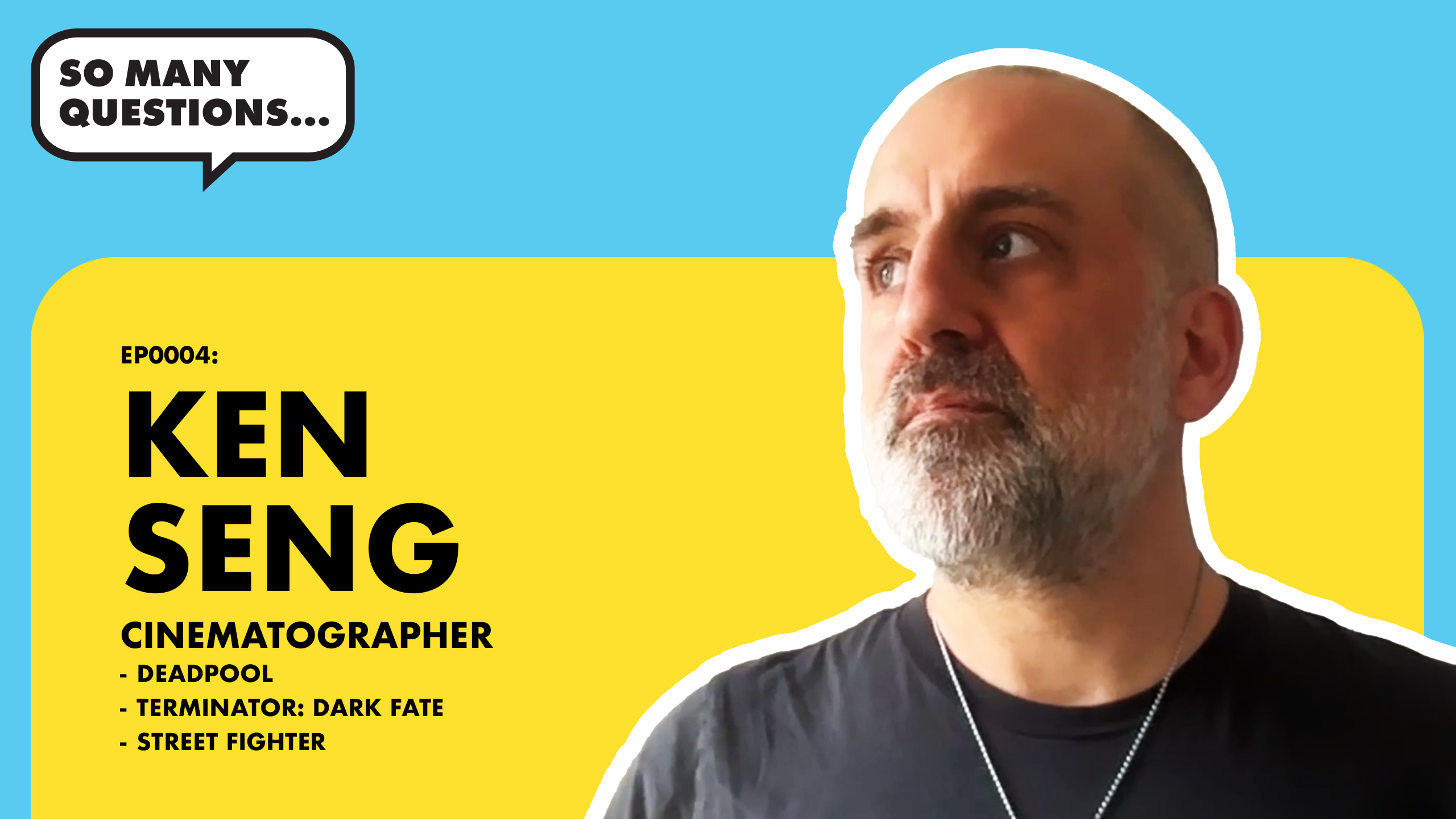
Ken Seng on Shooting Deadpool and Street Fighter
Director of Photography Ken Seng on Deadpool, Street Fighter, IMAX-scale action, French New Wave roots, and how craft, collaboration, and risk make film unforgettable.
The live-action Street Fighter movie opened in US theaters on October 16, 2026, and won its opening weekend at the box office. If you saw it in IMAX and wondered who decided it should look that big, the answer is Ken Seng.
Ken is the film’s director of photography. He also happens to be a friend from childhood. We used to play video games in his basement. In 2025 he joined us on the podcast from Australia, where he was preparing to shoot Street Fighter.
He talked about the film while it was still in prep. That makes his comments a useful look at the intentions behind the movie you can see in theaters right now.
Who shot the Street Fighter movie?
Ken Seng is the cinematographer of Street Fighter (2026). The film is directed by Kitao Sakurai and produced by Legendary Pictures, with Paramount Pictures distributing. Principal photography began in Australia in August 2025.
Ken’s earlier credits include the first Deadpool and Terminator: Dark Fate. He came to film from an unusual direction: business school, a 98-day wilderness course with the National Outdoor Leadership School, and then night classes in film school while he worked as a bike messenger in Chicago.
As director of photography, Ken is responsible for how the movie looks. In his words: “It’s a director of photography’s job to interpret the script with the director. And we are responsible for executing the photography of the film.”
That covers the lighting, the camera work, the rigging, the lenses, and the overall look of every frame. The cast includes Noah Centineo as Ken Masters, Andrew Koji as Ryu, Callina Liang as Chun-Li, Jason Momoa as Blanka, Cody Rhodes as Guile, and David Dastmalchian as M. Bison. How every one of them shows up on screen was part of Ken’s job.
“This is an IMAX movie for sure”
The biggest choice Ken made on Street Fighter came early. When he first joined the project, he pushed for the film to be built around IMAX.
“When I originally came on, the Street Fighter movie that I’m doing, I said, this is an IMAX movie for sure,” he told us. “It would do so well in that environment.” He had shot Terminator: Dark Fate for IMAX, so he knew the format. On Street Fighter, he said, “we really went all out.”
His reasoning had as much to do with how people watch movies now as with the format itself. Ken accepts that most people watch most things at home. He believes that is exactly why a theatrical release has to feel like an occasion.
Something that we’re doing on this film is trying to make a really big film for IMAX that is an event piece so that people are going to want to go to the theater and talk about it because of the camera work, because of the lighting, because of the sound.
For an event film, he said, every element has to pull its weight. “You’ve got the music. Everything has to really tie together in a beautiful cohesive way that doesn’t feel like you’re watching a TV show.”
Why Ken Seng still makes movies for the theater
Ken is open about loving cinemas. He believes a projected image stays with you longer.
“There’s something about the image being bounced off of something and shot back onto you,” he said. “I feel like it’s like reading a book on paper as opposed to reading something on an iPad. It imprints onto your brain in a way that you remember it and it stays.”
He admits he can’t point to the science behind that feeling. He is also realistic. He knows plenty of people will eventually stream Street Fighter at home. He just didn’t design it for a phone:
I would say I am not shooting this movie for someone to watch it on an iPhone.
His hope was simple: that you see it in a cinema, or at home on a great TV with good sound. If you are deciding how to watch it, that is the way its cinematographer intended.
A fight movie where stunts shape the camera
Every film has a core group of collaborators around the director and the DP. Ken listed the usual ones: production design, costumes, hair and makeup, and visual effects. On Street Fighter, he added one more near the top of the list.
“Right now I’m on an action movie, shooting Street Fighter. And the stunt coordinator is a massive part of that team,” he said. On many action films, the stunt team handles a single car chase or crash. “But on this movie, it’s a massive, massive part of the film.”
That makes sense for an adaptation of a fighting game. The fights are the story. How the camera moves through a fight, where it sits, and how long a shot holds all have to be planned alongside the people designing the choreography.
The prep work Ken described sounds like a movie built for spectacle. On the day we talked, he had just met with the special effects team “about like shaking and smoke and fire and wind.” Right after our call, he was heading to a shot-listing meeting with the director.
Working with director Kitao Sakurai
Ken looks for one kind of creative partnership above all others. He calls it a “no ego, best idea wins atmosphere,” and he said Street Fighter gave him one.
“The best relationships and the ones that I seek out are these sort of no ego, best idea wins atmosphere of working. And I’m in one of those right now, which is amazing.”
In practice, that partnership is a back-and-forth. Ken proposes a look, and the director responds with their own idea. The two build on each other until the visual plan clicks. He aims for something close to a 50-50 collaboration, where the ideas flow both ways.
Ken also starts every film by setting visual rules. He builds a presentation of images and references, then proposes guardrails for the whole movie. His examples from our conversation give you a sense of how specific those rules get:
- Lens rules: “Whenever we’re with this character we only use wide lenses close to them.”
- Movement rules: handheld camera only in certain kinds of scenes, with robotic crane moves in others.
- Texture and color: whether a film should feel grainy and handmade, or slick and built.
Those rules give a film a consistent visual language. You absorb it while you watch, even if you never notice it consciously.
Pressure, money, and taking a minute
A movie of this size comes with real stakes on set. Ken described days where “there’s like hundreds of thousands of dollars on the clock” and ten people are waiting on his call.
His answer to that pressure is to slow down on purpose. He meditates, and he uses that practice to notice when he is running on autopilot. When the pressure peaks, he gives himself permission to step away.
It’s okay to tell everyone, I just need a minute, and go like walk a lap around the set and then come back and be like, okay, here’s what we’re going to do.
It is a good reminder that the scale you see on an IMAX screen comes from many small, careful decisions made by people under time pressure.
Takeaway
Street Fighter is in theaters now, and its look was a deliberate bet on the big screen. Ken Seng wanted a fighting-game movie worth leaving the house for, with fights built hand in hand with the stunt team and images made for IMAX.
If you saw the film and want to know more about the person behind the camera, our full conversation covers how he got into filmmaking, how he thinks about craft and art, and what he was planning in Australia. You can listen to Episode 4 with Ken Seng here, or read more about what a director of photography actually sees.
FAQs
Kendall Guillemette | Oct 19, 2026