Boundaries vs Requests: What's the Critical Difference in Relationships?
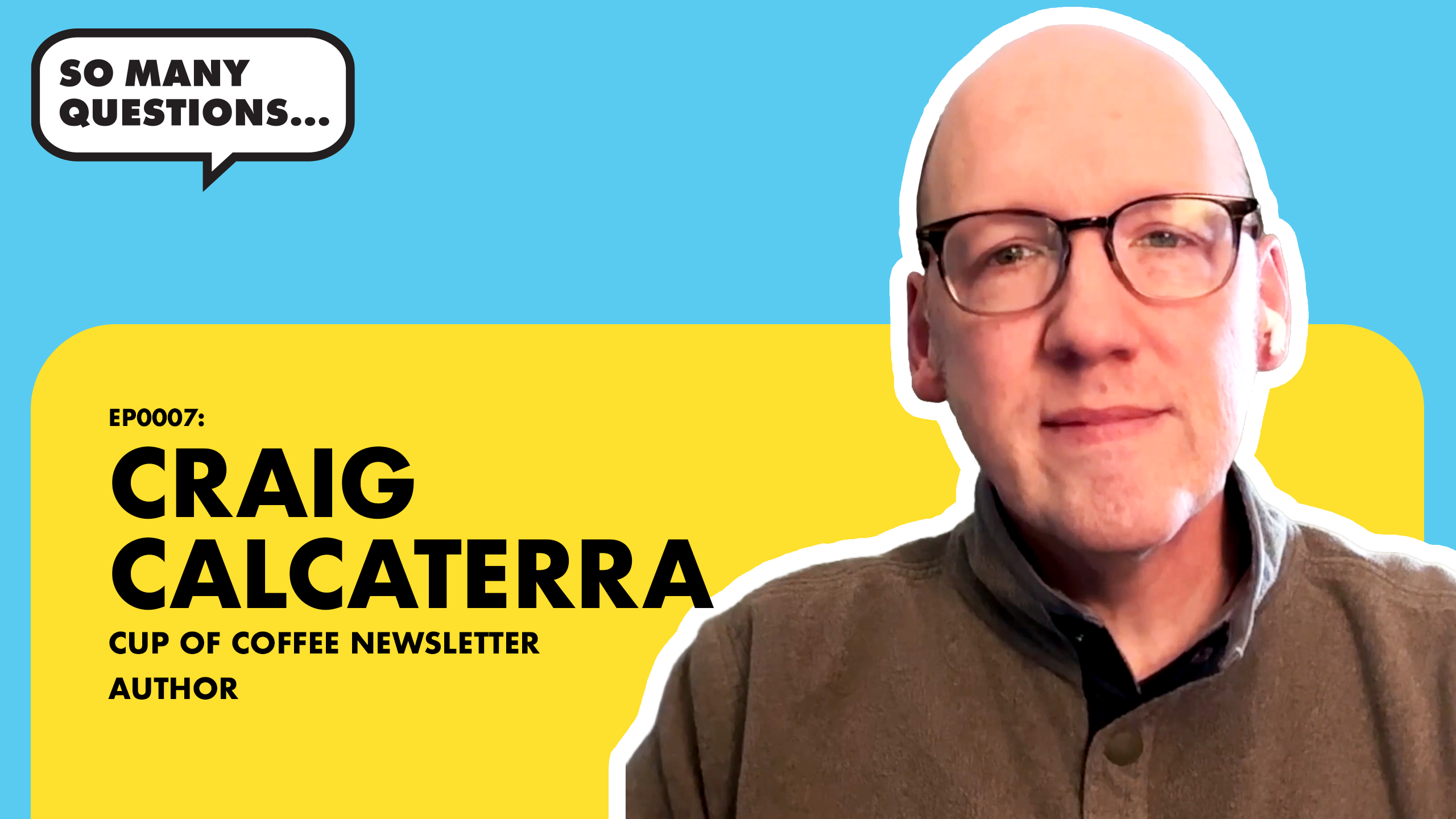
Episode 0007: Craig Calcaterra
Craig Calcaterra of Cup of Coffee on leaving law for baseball writing, the sabermetrics revolution, and finding contentment in an uncertain world.
You tell someone “I have a boundary that you can’t talk to me that way.” They do it again. You feel violated. Angry. Like they crossed a line you clearly drew. But here’s the problem: you didn’t set a boundary. You made a request. And confusing the two is why most attempts at boundaries fail.
The difference matters more than most people realize. A boundary protects you. A request asks someone else to change. One gives you autonomy. The other tries to control someone else’s behavior while calling it self-protection.
Most of us were never taught this distinction. We use “boundary” to mean “rule I want you to follow” or “thing I wish you wouldn’t do.” Then we wonder why our boundaries don’t work, why people keep crossing them, why we feel powerless in our own relationships.
Why the distinction matters
When you confuse boundaries with requests, you give your power away. You make your wellbeing dependent on whether someone else complies with what you want. If they don’t change, you feel stuck. Violated. Like you have no options.
That one sentence changes everything. A boundary isn’t about controlling their behavior. It’s about protecting yourself regardless of what they do. You don’t need their permission. You don’t need them to agree. You just need to enforce the consequence you control.
A boundary protects you, it doesn’t punish someone else.
Requests are fine. Necessary, even. But calling them boundaries makes you think you have protection when you actually have a hope that someone will comply. And when they don’t—because people often don’t—you’re left feeling powerless instead of protected.
The critical difference between boundaries and requests
A request asks someone to change their behavior. “Please stop interrupting me.” “Don’t call after 9 PM.” “I’d like you to be on time.” These are all requests. They might be reasonable. They might be important. But they require the other person’s cooperation.
A boundary states what you will do to protect yourself. “If you interrupt me again, I’m ending this conversation.” “I don’t answer calls after 9 PM.” “If you’re late, I’ll start without you.” These don’t require compliance. They’re actions you take regardless of what the other person does.
The test is simple: can you enforce it without the other person’s agreement? If not, it’s a request.
Graves put it plainly: “If you hurt me, I remove myself. That’s a boundary.” Not “you can’t hurt me.” Not “I have a boundary that you have to treat me better.” Just: if this happens, I will do this.
The power shift is immediate. You’re no longer waiting for someone to respect your boundary. You’re simply protecting yourself.
Signs you’re making requests, not setting boundaries
- You feel violated when someone doesn’t comply
- You keep restating the same boundary without changing anything
- You feel powerless when someone ignores what you said
- Your boundary requires someone else to change their behavior
- You’re angry they “crossed your boundary” when they could have just ignored your request
- You think enforcing a boundary means punishing someone
- You’re confused why your clearly stated boundaries don’t work
- You need someone to acknowledge or agree to your boundary for it to exist
- You feel like you have to convince someone to respect your limits
How to set actual boundaries instead of disguised requests
1. State the consequence you control, not the behavior you want stopped
Don’t say: “I have a boundary that you can’t yell at me.” Say: “When you yell, I leave the conversation. We can talk when you’re calm.”
The first tries to control their behavior. The second protects you regardless of what they do. They can yell all they want. You just won’t be there to hear it.
Graves noted that enforcement is critical: “Holding boundaries is really important.” Not just stating them. Not just hoping people respect them. Actually following through with the consequence you control.
2. Make your boundary about your action, not their compliance
Your boundary can’t be “you have to text me when you’re running late.” That’s a request. Your boundary is: “If you’re more than 15 minutes late without notice, I won’t wait. I’ll leave or start without you.”
Notice the shift. You’re not controlling whether they text. You’re deciding what you’ll do if they don’t. They can choose to be late without texting. You choose not to wait. Both people maintain autonomy.
3. Distinguish between what you need and what you prefer
You need to protect yourself from harm. You prefer that people behave in ways you like. Boundaries address needs. Requests address preferences.
If someone’s behavior is genuinely harmful to you—emotionally, physically, mentally—that’s where boundaries apply. If it’s annoying or frustrating but not harmful, you can make a request, but don’t call it a boundary and then feel violated when they don’t comply.
4. Accept that boundaries might end relationships
Graves said it half-joking: “A rule might be sucker punch in nose” if someone violates a boundary. The point underneath the joke is serious: boundaries have real consequences. Not punishments you inflict, but natural outcomes.
If your boundary is “I won’t continue a friendship with someone who regularly lies to me,” and they keep lying, the friendship ends. That’s not you punishing them. That’s you protecting yourself. They can keep lying. You just won’t be there.
Some people will choose their behavior over the relationship. That’s their right. Your boundary isn’t meant to force them to change. It’s meant to protect you whether they change or not.
5. Practice the enforcement before you need it
Most people state boundaries they have no intention of enforcing. “If you’re late again, we’re done” said to someone who’s been late fifteen times with no consequence is not a boundary. It’s an empty threat disguised as self-protection.
Before you state a boundary, ask yourself: am I actually willing to follow through? If not, don’t call it a boundary. Make a request. Or accept the situation as it is. But don’t pretend you have protection when you’re not willing to protect yourself.
Graves’s framework helps here: “Boundaries engender more autonomy for everyone. Freedom within safe containers.” When you enforce your boundaries consistently, people know where they actually stand. Paradoxically, that creates more freedom, not less.
6. Let go of needing them to understand
You don’t need someone to agree with your boundary for it to be valid. You don’t need them to think it’s reasonable. You don’t need them to understand why you need it.
“I’m ending this conversation now” doesn’t require their permission. “I won’t discuss this topic with you anymore” doesn’t need their buy-in. These are actions you take to protect yourself, not negotiations you’re opening.
If you find yourself explaining and justifying and defending your boundary, you’ve probably slipped back into making a request. Boundaries don’t require consensus. They just require enforcement.
7. Know the difference between boundaries and walls
A wall keeps everyone out. A boundary lets people in while protecting you from harm. Walls say “I won’t be vulnerable.” Boundaries say “I’ll be vulnerable in contexts where I’m safe.”
If your boundaries are actually walls—“I never share anything personal,” “I don’t let anyone get close,” “I always keep my guard up”—that’s not protection. That’s isolation. Boundaries create safety for connection. Walls prevent connection to avoid risk.
The goal isn’t to protect yourself from all discomfort. It’s to protect yourself from actual harm while staying open to relationship.
FAQs
Takeaway
The confusion between boundaries and requests keeps people stuck in cycles of feeling violated, powerless, and angry. You state your boundary. Someone ignores it. You feel disrespected. You restate it stronger. They ignore it again. You wonder what’s wrong with you that people won’t respect your boundaries.
Nothing is wrong with you. You just haven’t set a boundary. You’ve made a request and called it a boundary.
Real boundaries don’t require compliance. They don’t need permission. They don’t depend on someone else changing. They’re simply actions you take to protect yourself, regardless of what anyone else does.
As Joshua Graves made clear: boundaries protect you, they don’t punish others. Stop trying to control behavior. Start protecting yourself. The shift is immediate, and the freedom is real.
Your boundaries are yours to set and yours to enforce. Nobody else gets a vote. That’s the whole point.
Kendall Guillemette | Feb 18, 2026