The Seeds in the Backyard: How to Know Which Creative Projects to Pursue
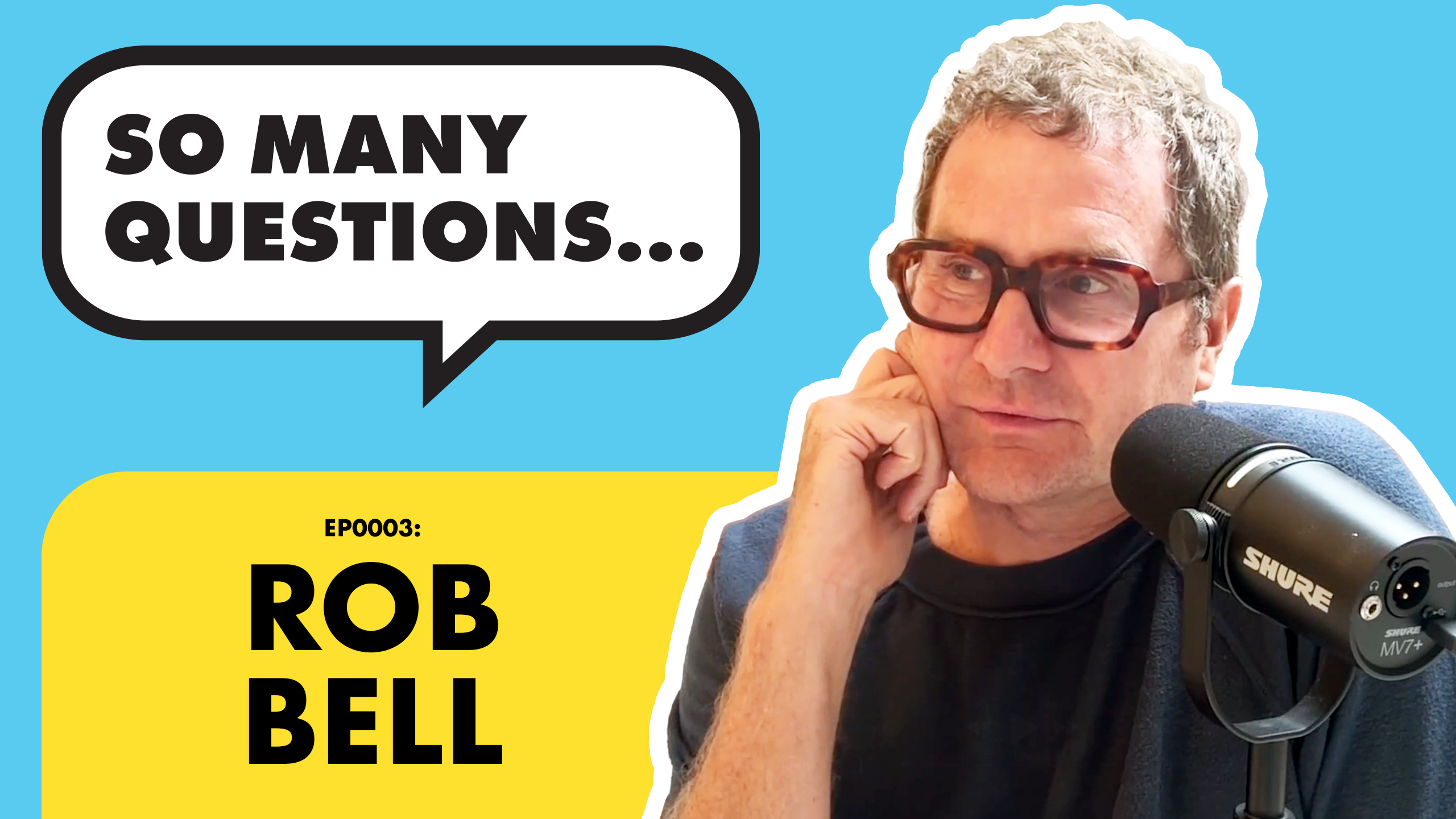
Episode 0003: Rob Bell
Rob Bell interview on So Many Questions to talk creativity, sermons as art, vulnerability, and how suffering shapes what we make.
You have too many ideas. A folder full of project sketches. Notes scattered across apps. Half-finished drafts competing for attention. Every creative person faces the same question: which one should I actually make?
Most advice tells you to pick the most marketable idea, follow your passion, or build a five-year plan. But Rob Bell, who’s built a 30-year career across music, ministry, writing, and podcasting, offers a different approach. He talks about “seeds in the backyard”. Noticing what’s already growing, tending it, and following where it wants to go.
This isn’t about adding more planning frameworks. It’s about learning to recognize which ideas have life in them and which ones you’re forcing.
Why choosing creative projects matters
You can’t make everything. Time and energy are finite. Pick the wrong project and you’ll spend months on something that drains you. Pick the right one and the work feels like discovery instead of obligation.
The pressure to choose correctly can paralyze you. You research competitors, calculate market fit, poll friends, and still feel uncertain. Meanwhile, your creative energy dissipates in analysis instead of action.
The real cost isn’t picking a “wrong” project. It’s the anxiety that keeps you from starting anything at all.
The difference between planning and noticing
Traditional career advice pushes five-year plans and strategic roadmaps. That approach works for corporate ladders but often suffocates creative work.
Planning assumes you know where you’re going. Noticing assumes you’re paying attention to what’s already happening inside you. Rob Bell doesn’t relate to having a career in the conventional sense. When someone asks about five-year goals, he draws a blank. Instead, he follows what bubbles up: “There were things to make and speak and film and paint and tour and so I just kept following something and it was like an intuitive let’s try this next.”
The seeds-in-the-backyard metaphor captures this perfectly. You’re not inventing ideas from scratch. You’re noticing what’s already sprouting, giving it water and light, and seeing what wants to grow.
Signs a creative project has life in it
Not all ideas deserve your time. Some are just noise. Here’s how to tell the difference:
- It keeps coming back. You think about it in the shower, while driving, before bed. It won’t leave you alone.
- You’re already making it. You’ve started without deciding to start. Sketches appear. Notes accumulate. The project is pulling you in.
- It connects to other things. Rob Bell describes his podcast ideas as noticing patterns: “Something happens and I’m noticing how it connects to other things.” Good projects have threads that tie to your life, your questions, your other work.
- You feel energy, not dread. Some projects feel heavy before you start. Others feel like curiosity. Follow the energy.
- It doesn’t need to be perfect. You’re more interested in what it wants to become than controlling every outcome.
What to do instead of overthinking
Here’s a practical approach to choosing creative projects without drowning in analysis:
1. Notice what you’re already tending.
Look at what you’ve been paying attention to. What ideas keep showing up in your notes? What questions are you asking? Rob Bell says it starts with “paying attention to something and beginning to notice a pattern.” You’re not generating ideas from nothing. You’re recognizing what’s already growing.
2. Ask what the project wants to be.
Architect Louis Kahn would ask his buildings: “What does this want to be?” Apply that to your creative work. Instead of forcing an idea into a predetermined format, let the idea reveal its form. Bell describes this as “the mind is engaged but it’s serving something larger than itself.”
3. Make something small first.
Don’t commit to a massive project right away. Test the seed. Write one essay instead of planning a book. Record one song instead of an album. Make a single video instead of launching a channel. See if the idea holds your interest once you’re actually working on it.
4. Follow intuition, not strategy.
Bell’s career isn’t strategic: “I don’t know what’s happening. I don’t know where I’m trying to go. I’m trying to be true to this.” Intuition isn’t mystical. It’s pattern recognition from your lived experience. Trust what feels right even when you can’t articulate why.
5. Focus on the making, not the outcome.
Bell frames it clearly: “You’re learning the joy is in the making and then you’ve surrendered the outcome.” Pick projects where the process itself interests you. If you’re only excited about the finished product, you won’t survive the middle.
6. Build from beginner’s mind with craft muscles.
You don’t abandon everything you’ve learned. You bring your skills but approach each project fresh. Bell talks about “beginner’s mind in creative practice” while still building “craft muscles.” Experience serves the work without strangling it with rules.
Example: From scattered ideas to focused work
Sarah, a graphic designer, had seventeen project ideas in her phone. A typeface project. A portfolio redesign. A daily illustration challenge. A zine about her neighborhood. A client education course. She felt overwhelmed and couldn’t start any of them.
Then she noticed something. She kept photographing old signs around her city. She’d been doing it for months without thinking about it. The photos were piling up. She started sketching lettering based on the signs. Within a week, she’d created ten pieces she actually liked.
She didn’t plan a sign-based project. She noticed the seed that was already growing. The zine idea transformed into something real: a catalog of neighborhood typography. She made the first issue in three weeks. It felt easy because she’d already been doing it.
The other ideas stayed in her phone. Some might grow later. Most won’t. That’s fine. The project with life in it made itself known by already being underway.
FAQs
The takeaway
You don’t need a better system for choosing creative projects. You need to notice what’s already growing and give it space. The seeds-in-the-backyard approach isn’t about being passive. It’s about recognizing that your best work often begins before you consciously decide to start it.
Stop asking “what should I make?” Start noticing “what am I already making?” The project pulling at your attention, connecting to other ideas, showing up in your notes, that’s the one. Tend it. See what it wants to become. Follow that intuitive next step.
The joy really is in the making. And you’ll learn more from completing one living project than from planning ten theoretical ones.
Kendall Guillemette | Feb 9, 2026