Craft is Tools, Art is Forgetting the Rules: The 10,000 Hour Paradox
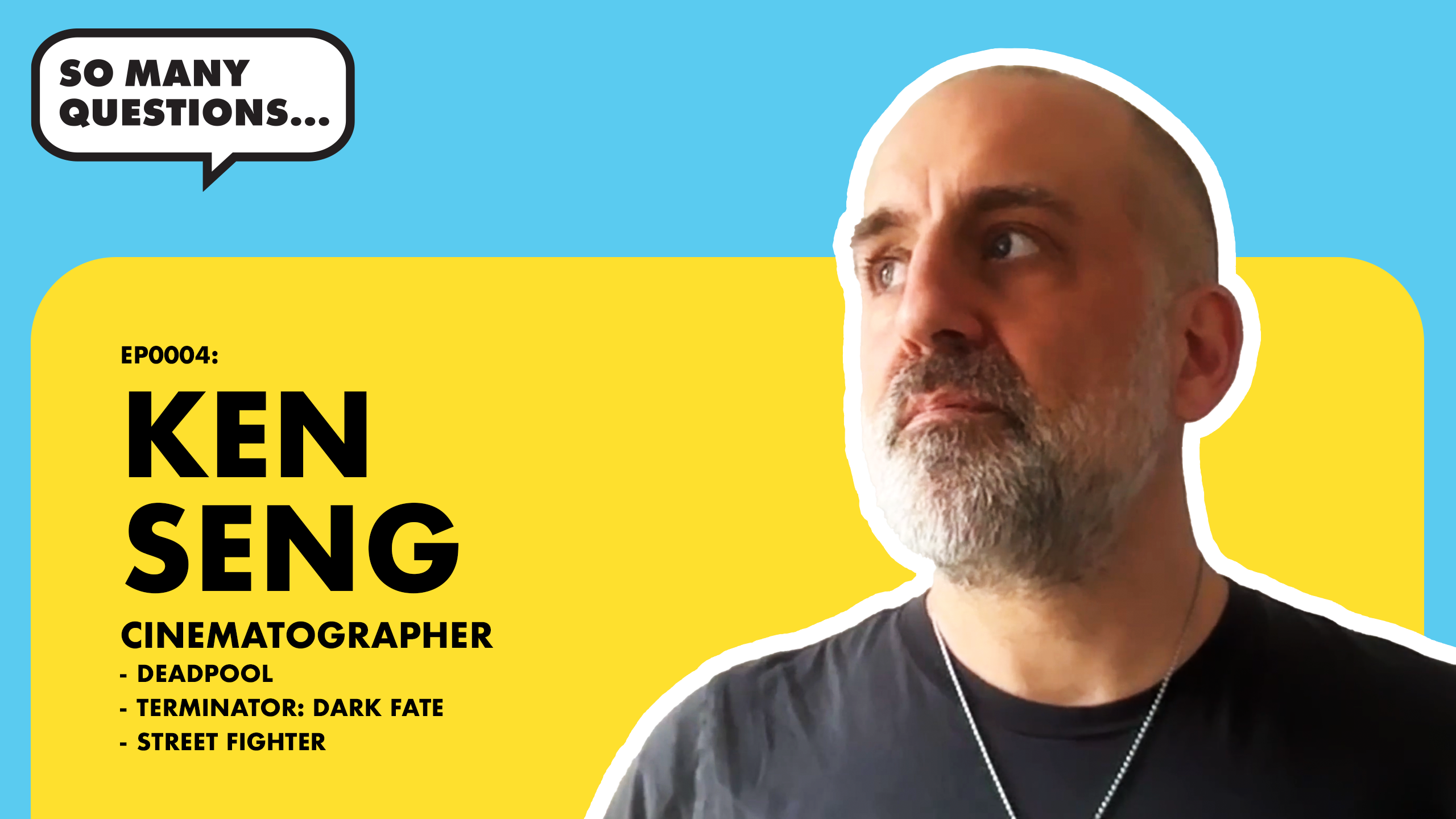
Episode 0004: Ken Seng
Director of Photography Ken Seng on Deadpool, Street Fighter, IMAX-scale action, French New Wave roots, and how craft, collaboration, and risk make film unforgettable.
You spend years learning the rules. How to properly expose a photograph. How to structure a sermon. How to frame a shot according to the 180-degree rule. You practice until the techniques become automatic, until excellence is built into your muscle memory.
Then someone tells you: now forget all of it. Break the rules. Create like a child who never learned the conventions. Make art, not just technically correct work.
This is the paradox every creative faces. You need the craft to have tools. But if you stay in craft mode, you make competent work that feels lifeless. According to Malcolm Gladwell, 10,000 hours are necessary to build that skill and craft. And then they become something you have to escape.
Why craft alone isn’t enough
Craft is the technical skill. The mechanics. The stuff you can teach and learn through repetition. It’s knowing how to do something correctly according to established standards.
Ken Seng, director of photography on films like Deadpool and Street Fighter, described this clearly on the podcast: “10,000 hours in cinematography. Experience building craftsman skills through repetition.” He talked about his early years with “militaristic lighting standards on set”, learning what excellence looks like technically.
That craft is essential. You can’t break rules you don’t know. You can’t create something fresh if you don’t understand the fundamentals. The 10,000 hours aren’t wasted. They’re the foundation.
But Seng also described the limitation: craft without art becomes tired. Repetitive. Technically perfect but creatively dead. “Throwing away cinematography rules. Child’s finger painting versus learned technique. Starting new, so things don’t become tired.”
The paradox is real. You need the craft. Then you need to unlearn it just enough to create something alive.
The difference between craft and art
Craft is tools. Art is creating beyond the rules. Craft is what you learn. Art is what emerges when you stop thinking about what you learned.
Rob Bell, author and speaker, talked about this in terms of creative process. The craft muscles are there, developed through years of work. But the approach is fresh, like you’ve never done this before.
“Beginner’s mind in creative practice. Starting new each time while building craft muscles.”
Seng framed it as the difference between film school and art school mentalities: “Unlearning film school conventions. Art school versus film school training. Different approaches to visual creativity.”
Film school teaches you the 180-degree rule, proper framing, beauty lighting. Essential knowledge. Art school teaches you to ask why those rules exist and what happens when you violate them deliberately.
You need both. The technical knowledge to understand what you’re doing. The creative freedom to do it differently anyway.
Signs you’re stuck in craft mode
- Your work is technically excellent but feels lifeless
- You know all the rules but can’t seem to break them effectively
- Everything you make looks competent but not compelling
- You’re more concerned with doing it correctly than creating something interesting
- You judge creative work by technical standards only
- You feel anxious when you deviate from established practices
- Your work looks like everyone else’s in your field
- You can explain your choices technically but not emotionally
- You’ve lost the joy you had when you first started creating
- People respect your skill but don’t connect with your work
How to navigate the craft-to-art transition
1. Master the fundamentals first
You can’t effectively break rules you don’t understand. The creative who says “I don’t need to learn technique, I just create from intuition” usually makes amateur work.
Seng’s path exemplifies this: years of technical training. Loading trucks. Learning lighting. Understanding exposure, composition, camera movement. Building the craft muscles through repetition until excellence became automatic.
“Making student films look like Hollywood. Obsession that drove lighting and photography focus. Working every weekend on indie films.”
That foundation gave him the tools to then break conventions deliberately. You need to know what you’re violating and why before the violation becomes art instead of just incompetence.
2. Study the conventions before you discard them
Ken talked about film school conventions like the 180-degree rule: the standard practice for maintaining visual continuity. You learn it. You practice it. You understand why it exists and what it accomplishes.
Then you decide: does this rule serve this specific story? Or is breaking it more interesting?
Without understanding the rule, you break it accidentally and create confusion. With understanding, you break it intentionally and create impact.
Rob Bell studied the sermon as art form. Understood the history, the political and poetic dimensions. Learned the craft of connecting with the back of the room. Then brought that craft to non-traditional venues: punk clubs, music halls, places sermons weren’t “supposed” to happen.
Same craft. Different application. That’s the transition.
3. Give yourself permission to start fresh each time
Bell’s phrase “beginner’s mind in creative practice” captures this perfectly. You bring your developed craft muscles, but you approach each project like you’ve never done it before.
This prevents the staleness that comes from repeating what worked before. Each time is a chance to discover something new, even in a form you’ve practiced for decades.
Seng described “starting new so things don’t become tired.” The craft is there, the 10,000 hours don’t disappear. But the approach is fresh, open, curious. Not “here’s how I always do this.” More like “what does this specific project want to become?”
4. Learn when to trust intuition over technique
At a certain point, the craft needs to get out of the way. You’ve built the muscles. Now you trust them to work while you focus on something more important than technical correctness.
Bell talked about following creative intuition without a plan: “Not working a five-year plan, following what arises. What does this building want to be?” That’s Louis Kahn’s approach to architecture, asking what the creation wants to become rather than imposing your technical knowledge on it.
You can only do that after you have the technical knowledge. But once you have it, technique becomes a tool that serves intuition, not a rulebook that constrains it.
5. Understand that art school and film school approaches serve different purposes
Seng’s distinction between these mentalities is useful beyond literal film and art schools. It’s two ways of approaching creative work.
The film school approach: learn the rules, master the standards, produce technically excellent work. The art school approach: understand why rules exist, then violate them deliberately to create something fresh.
You need both at different stages. Early in your development, the film school approach builds your craft. Later, the art school approach keeps your work alive.
Most creatives get stuck in one or the other.
- All craft, no art: Technically perfect, but emotionally flat.
- All art, no craft: Emotionally raw, technically incompetent.
The sweet spot is having both available and knowing which one to use when.
6. Create constraints that force you out of patterns
When Seng described setting “guardrails in cinematography”. Rules like “wide lenses close” or “handheld only here”, he’s describing deliberate constraints that force creative problem-solving.
These aren’t the conventions you learned in film school. These are rules you create for a specific project that force you to work differently than you usually do. They prevent you from falling back on your default craft patterns.
Bell did this by constantly finding “new doors into the same medium. Death and rebirth within a medium.” Same fundamental craft—speaking, teaching, exploring ideas—but through different forms, lengths, venues, styles.
The craft muscles stay strong. The approach stays fresh.
7. Accept that mastery means unlearning what you mastered
This is the hardest part. You spent years getting good at something. Now you have to consciously unlearn some of it to keep growing.
Seng described his own evolution: “Learning to not bend everything to my will. Evolution from militaristic to open leadership.” The early militaristic approach built excellence. The later open approach built art.
You don’t lose the craft. You gain the ability to not let craft dominate. To make choices based on what serves the work, not what demonstrates your technical skill.
A real example
Ken Seng’s journey from student filmmaker to director of photography on major films shows this progression clearly. Early years: obsessive focus on making student films look like Hollywood movies. Learning proper exposure, lighting, composition. Building the technical foundation.
Middle years: working with intense mentors who demanded perfection. Secret Service earpieces, militaristic cable management, excellence as the baseline. Craft built through repetition until it became automatic.
Later years: “Consciously discarding rules to create freshly. Child’s finger painting versus learned technique. Working with top crews in Sydney and respecting different working styles internationally.”
The craft is still there. He didn’t forget how to light properly or compose a shot. But he’s no longer constrained by the rules. He can choose to follow them or break them based on what the specific story needs.
That’s the paradox resolved. You spend 10,000 hours building tools. Then you use those tools without being controlled by them. Craft in service of art, not craft as an end in itself.
FAQs
Takeaway
The 10,000 hour rule is helpful. Mastery requires deep practice, technical skill, understanding of conventions. You need the craft.
But craft alone produces work that’s correct without being compelling. Technically perfect without being alive. The paradox is that you need to build the craft, then learn to forget it just enough to create with freedom.
As Ken Seng demonstrated through his evolution from perfectionism to creative openness, the goal isn’t to choose between craft and art. It’s to develop craft so thoroughly that it becomes unconscious, available when you need it but not constraining when you don’t.
As Rob Bell showed through constantly finding new doors into his medium, mastery isn’t about repeating what you know. It’s about using what you know to create what you’ve never made before.
Build your craft muscles through repetition. Then trust them enough to stop thinking about them. Learn the rules deeply. Then break them deliberately. Become technically excellent. Then remember that technique serves vision, not the other way around.
The art is in knowing when to apply your craft and when to throw it away and finger paint like a child. Both are necessary. Neither is sufficient alone.
Kendall Guillemette | Feb 11, 2026