Podcast vs Interview: A Podcast Is a Medium, an Interview Is a Format
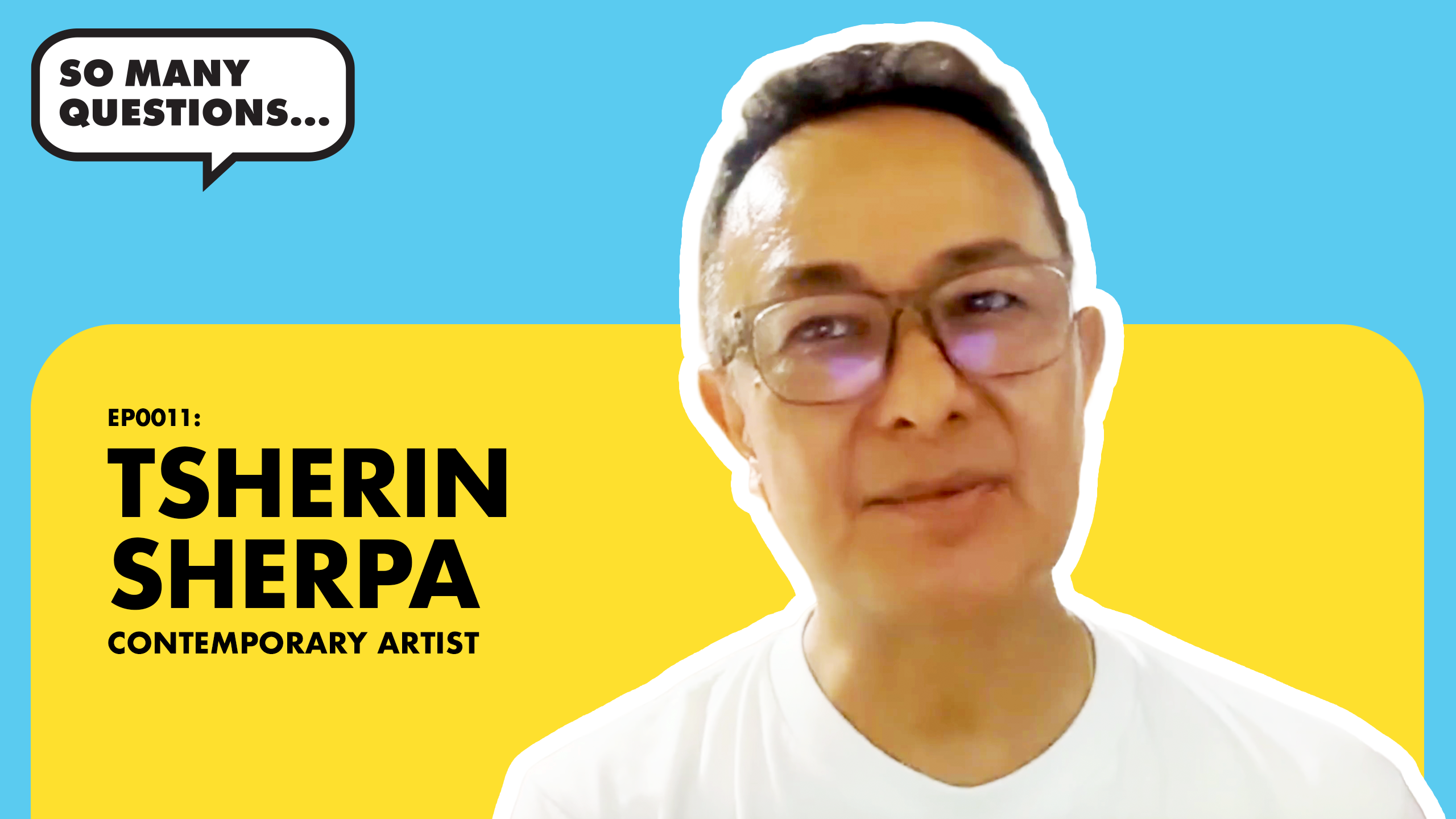
Episode 0011: Tsherin Sherpa on bringing Thangka & the art of Nepal to the contemporary art world
Nepalese artist Tsherin Sherpa on training as a Thangka painter at 13, representing Nepal at the Venice Biennale, and his show at the Honolulu Museum of Art.
It’s one of those questions that sounds simple until you try to answer it. What’s the difference between a podcast and an interview? Are they the same thing? Are they different things? Why does the question even come up?
The short answer
A podcast is a medium: an on-demand audio (or video) show distributed through feeds, apps, and platforms.
An interview is a format: a specific structure where one person asks questions and another answers them.
These aren’t opposites. They’re different categories entirely. A podcast can use the interview format (most popular podcasts do). An interview can happen on a podcast, on the radio, on TV, in a magazine, or in a job application. The two concepts overlap constantly, which is why people confuse them.
The cleanest way to think about it: a podcast is how something gets distributed. An interview is what’s happening inside it.
The longer version
When someone asks “is this a podcast or an interview?” they’re usually asking one of three different things underneath:
1. “Is this a single conversation or an ongoing show?”
An interview can be a one-time event. A journalist talks to a source, files the story, and moves on. A podcast is a series. Even if every episode is an interview, the show itself is the unit, not any individual conversation.
2. “Is this casual or structured?”
People sometimes use “podcast” as shorthand for casual, long-form, conversational, and “interview” as shorthand for formal, prepared, journalistic. That’s a real difference in feel, but it’s not a definitional difference. A podcast can be tightly structured (NPR’s Fresh Air). A formal interview can feel like a hangout (any Marc Maron episode).
3. “Is the host the expert, or is the guest?”
In a traditional interview, the journalist is a generalist whose job is to extract information from a subject-matter expert. In many podcasts, especially conversational ones, the host is also a peer or expert in the same space, and the conversation is more lateral than vertical. That changes the dynamic significantly even when the format looks identical.
Why the distinction matters for hosts
If you’re starting a show, getting this distinction right changes how you prep.
If you’re making a podcast, you’re making a show. You need a consistent voice, a recognizable point of view, and episodes that connect across the catalog. Listeners subscribe to the show, not to any individual episode. That means the through-line matters more than any single conversation.
If you’re conducting an interview, you’re extracting and shaping a story. Each conversation is self-contained. Your job is to get something usable from the guest, structure it, and present it as a finished piece. You don’t need narrative continuity across interviews because each one stands alone.
Most successful interview podcasts do both at once: each episode works as a standalone conversation and contributes to a recognizable show identity. That’s harder than it sounds. It requires the host to maintain a personal voice while still serving the guest.
Why the distinction matters for listeners
If you’re choosing what to listen to, knowing the difference helps you know what you’re signing up for.
A podcast is a relationship. You’re subscribing because you trust the host’s taste, perspective, or curiosity. You’ll keep listening even when you don’t know who the guest is, because the host is the reason you’re there.
An interview, outside of a podcast, is transactional. You’re there for the subject, not the interviewer. Once the story is told, you move on.
That’s why people often have favorite podcast hosts but rarely have favorite interviewers in the abstract. The medium creates a longer-term relationship with the voice on the other end of the recording.
Common questions about the difference
Can a podcast be more than just interviews?
Yes. Podcasts can be solo monologues, scripted narratives, panel discussions, dramatic fiction, news roundups, or any combination. Interviews are one of the most popular formats but far from the only one. What is an interview podcast? goes deeper on the interview-format subset.
Is a podcast just a recorded interview?
Not necessarily. A recorded interview is one episode. A podcast is the show those episodes live inside. A single recorded interview could end up on a podcast, on YouTube, on a website, or in a press release. The recording isn’t the podcast. The show is.
Is one harder than the other?
They require different skills. A great interviewer is good at extracting information from a guest in a single sitting. A great podcast host is good at building a sustained relationship with an audience over time. The first is more journalistic. The second is more like writing a long-running column.
Why do people use the words interchangeably?
Because most popular podcasts use the interview format. If you say “I listened to a podcast yesterday,” there’s a good chance what you actually listened to was an interview-format podcast episode. The two concepts overlap so often in practice that the words have started to drift toward each other in casual usage.
Takeaway
A podcast is a delivery medium for episodic audio (and now video) content. An interview is one of many possible formats inside that medium. The reason the two get confused is because they overlap constantly. Most podcasts are interview shows, and interview shows usually live on podcasts.
If you’re a host, building a podcast means building a show identity that extends beyond any individual conversation. If you’re a guest, doing a podcast interview means walking into someone else’s ongoing relationship with their audience, not just answering a few questions.
The distinction is small but it changes what you’re actually doing, and how the audience receives it.
Kendall Guillemette | Jun 2, 2026