Technology and Creativity
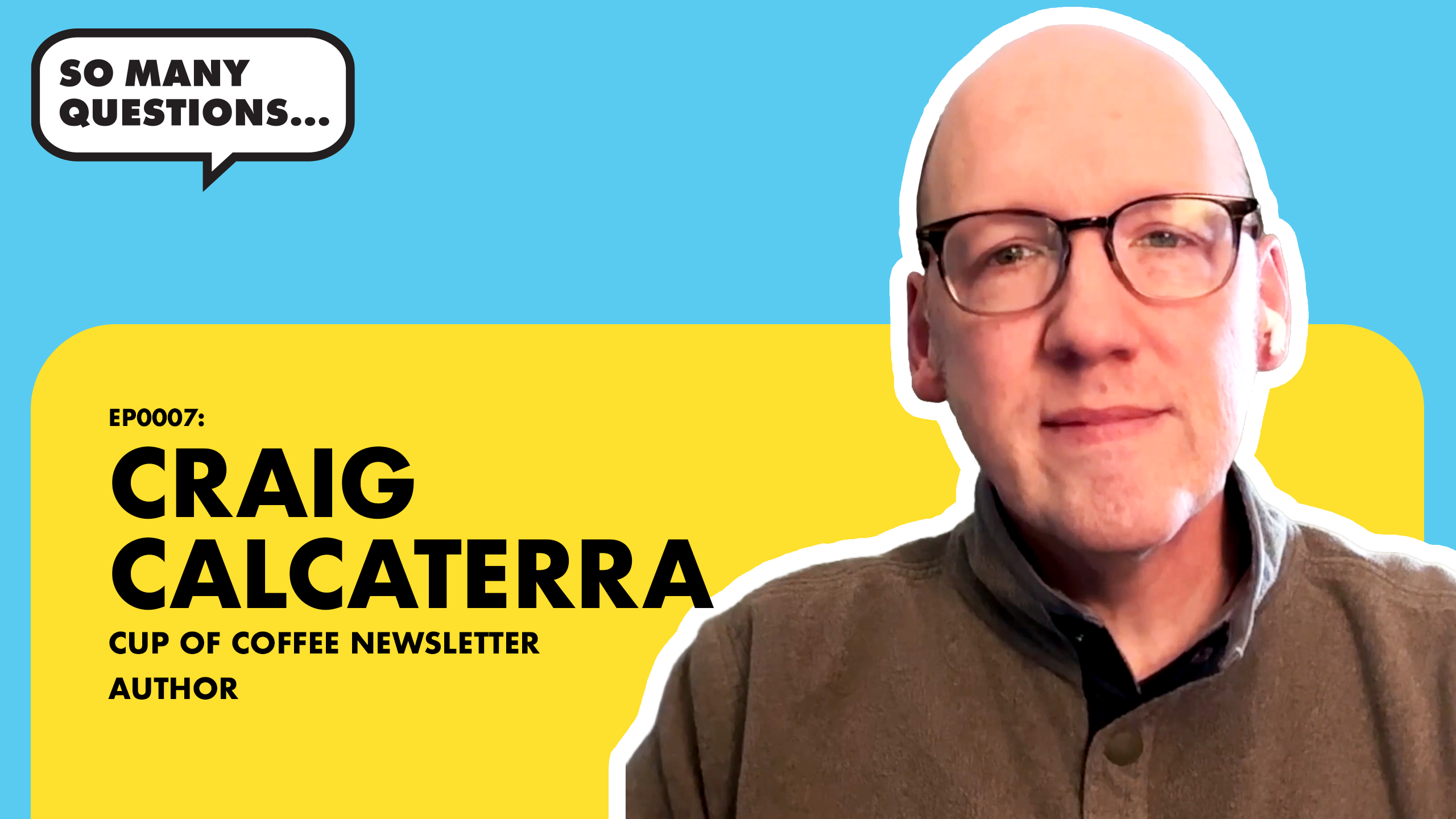
Episode 0007: Craig Calcaterra
Craig Calcaterra of Cup of Coffee on leaving law for baseball writing, the sabermetrics revolution, and finding contentment in an uncertain world.
Creativity used to feel quieter. Not easier. Just slower. Ideas arrived unevenly. Work took time to show itself. You could sit with something unfinished without immediately explaining it. Technology’s ubiquity in society has changed that rhythm.
Now, creativity happens alongside tools that suggest, automate, accelerate, and measure. Ideas arrive faster. Output is easier. Visibility is constant. And somewhere in that speed, many creators feel both empowered and unsettled. We want to explore that tension. Not to resolve it. Just to stay with it long enough to understand what’s actually changing.
What we mean by creativity
Creativity isn’t just art. It’s not limited to galleries, studios, or finished work.
Creativity is the act of responding. To an idea. To a problem. To a feeling that doesn’t yet have form. It shows up in design decisions, writing drafts, code, music, strategy, and conversation. It’s there as we fold our clothes, cook, make our morning coffee. It lives as much in process as in product.
When we talk about creativity here, we’re talking about that inner movement. The moment something shifts from unformed to expressed.
How technology entered the creative process
Technology has always shaped how things are made. Brushes, printing presses, cameras, software. Tools have never been neutral accessories What feels different now is intimacy and access. Creative tools no longer just extend the hand. They anticipate it. They offer options before intention fully forms. They learn preferences. They fill silence.
For many creators, this is liberating. Barriers lower. Experiments multiply. Work becomes possible that once wasn’t. And still, something subtle changes when the tool participates. Shifting the idea from the creator, to the tool is a sea change in the creative process.
Speed, output, and the pressure to produce
One of technology’s loudest promises is speed. Ideas can be executed immediately. Drafts can be polished quickly. Sharing is frictionless. Feedback is instant. This can feel like freedom. But speed also reshapes expectations. When output becomes easy, pauses feel suspicious. When creation becomes visible, process turns performative. When tools reward consistency, rest can feel like disappearance. Creativity doesn’t disappear under these conditions. But it often changes shape.
People give themselves and others less time to contemplate, reflect, and live. Expecting output and content. I’ve noticed a shift away from thoughtful experiments, and responses to that listening ear, and a move toward content calendars, and regular output. That structure can be a positive for the creative process, but it can also be a limiting factor.
Technology as collaborator
More creators now describe technology not as an instrument, but as a collaborator. Artificial intelligence generates images, text, and music. Design software suggests layouts. Algorithms surface patterns and references that people who are creating use as a blueprint for the things they’re creating.
This raises questions that aren’t technical. They’re relational. Who is speaking here? What counts as authorship? Where does intention live when suggestions arrive pre-formed? For some, this technological collaboration expands possibility. For others, it introduces distance. Both responses are honest.
Using technology as a collaborator is fine, so long as the creator is aware of it’s place in the process. Of course there is a place for AI generated images, and text, with the understanding that they are not “creative” in and of themselves. The use of these technologies can be done creatively, but the creator is creatively using the technology, rather than creatively creating the images or text. There’s certainly nuance here.
Originality in a world of suggestions
Originality has always been misunderstood. It was never about making something from nothing. It was about seeing differently. Choosing. Emphasizing. Responding from a particular body and history. Technology complicates this by offering similarity at scale. Styles repeat quickly. Aesthetic language spreads faster than reflection.
Originality doesn’t disappear. But it becomes harder to locate when everything feels familiar before it’s fully felt. This isn’t a moral problem. It’s a perceptual one.
Creativity, tools, and trust
At the center of this conversation is trust. Do you trust your instincts when tools offer alternatives? Do you trust slowness when speed is available? Do you trust unfinished ideas when completion is easy? Technology doesn’t remove creative intuition. But it can crowd it. It can make it quieter, easier to override. Many creators aren’t struggling with lack of ideas. They’re struggling with deciding which voice to follow.
Common misunderstandings about technology and creativity
Technology replaces creativity. Technology isn’t creative in and of itself. It changes how creativity moves, not whether it exists.
Using tools makes work less authentic. We have always used tools to express our creativity. Authenticity isn’t located in tools. It lives in choices.
Faster creation means better work. Speed and depth don’t always travel together. Reflection, contemplation, and listening to creative instincts often don’t happen at fast speeds. Creavity can take time.
These misunderstandings flatten a relationship that is actually nuanced and alive.
Living creatively alongside technology
This isn’t about rejecting tools. Or embracing them fully. It’s about noticing.
- when a tool opens something
- when it shortcuts something that mattered
- when it supports your attention
- when it fragments it
Creativity doesn’t require purity. It requires presence.
Sometimes that means using the tool. Sometimes it means stepping back from it. Often, it means moving between both.
Where this leaves us
Technology will continue to evolve. Creative tools will become more powerful, more predictive, more involved. What remains constant is the human need to respond honestly to experience. Creativity has always adapted to its conditions. This moment is no different. It’s just closer. Louder. Faster.
No one can tell you how to create. Your relationship with technology is part of the work now. And that relationship deserves attention, not judgment. What works for you right now?
Kendall Guillemette | Jan 7, 2026